Struggling to Embrace Eco-Friendly Diwali
Published in - Organizational
Nov 14, 2023
Struggling to Embrace Eco-Friendly Diwali
As winter descends, Diwali festivities in India worsen the country’s already severe air pollution crisis. The cold winds trap pollutants in the atmosphere, contributing to India’s consistently poor global air quality rankings. Bhubaneswar a major eastern city, the capital of Odisha, recorded a PM2.5 level at a staggering 81.37 µg/m3—nearly 17 times higher than the World Health Organization‘s safety limit of 5 µg/m3. This alarming trend poses significant public health concerns.
Investigating People’s Perspective:
Despite the administration’s on-paper regulations and penalties for illegal fireworks activities, the lack of public awareness about green crackers during Diwali remains a significant issue. To address this, the government is making efforts to make green crackers mandatory for all over India. Green crackers with the CSIR-NEERI logo and a QR code certifying their eco-friendliness. These are devoid of toxic barium compounds and create 30% less pollution.
The research team at SwitchON Foundation conducted a cross-sectional survey throughout the markets accommodating licensed vendors in Bhubaneshwar to gain insights into the public’s perception of “Green Diwali”. The study was focused on engaging potential buyers of green crackers. Subsequently, flash surveys were executed with the respondents at the Baji Bazars between the 7th and 8th of November, with a sample size of 111 random individuals consisting of 94 male and 17 female participants. The findings and conclusions are listed herein:
Findings:
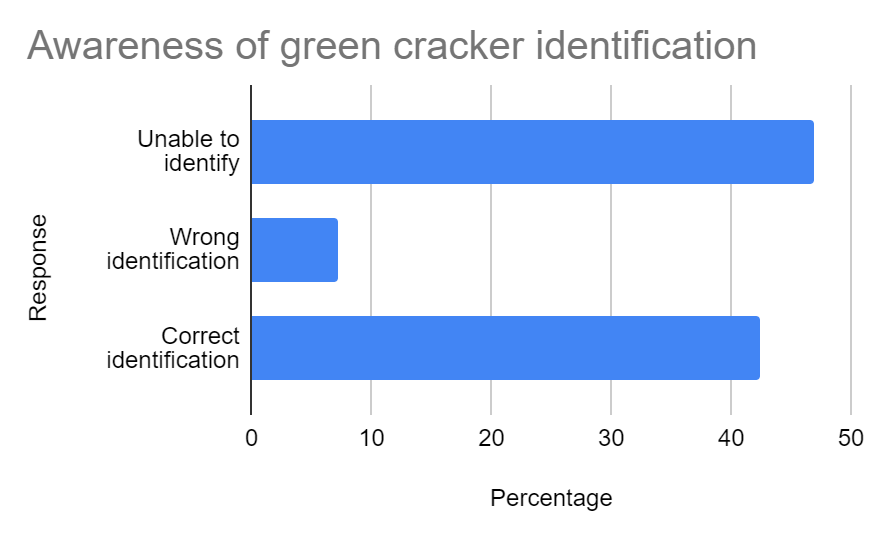
Figure 1: People’s awareness of green crackers identification in Bhubaneswar
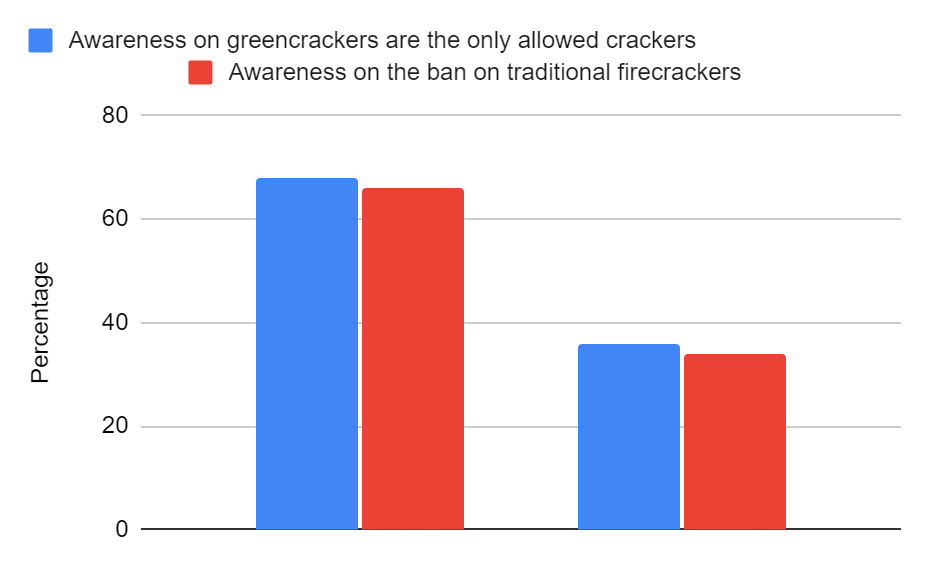
Figure 2.: People’s awareness of the permission and ban on crackers in Bhubaneswar
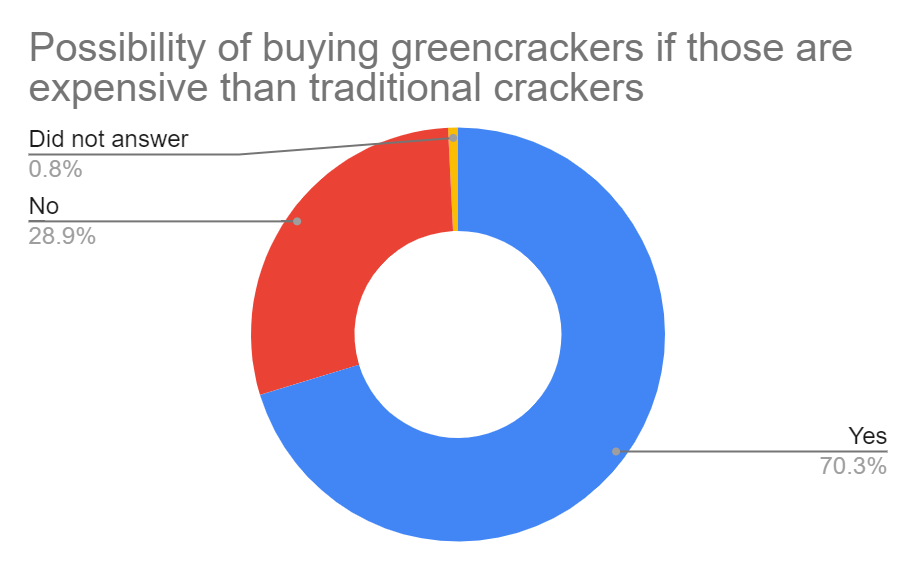
Figure 3: People’s Opinion on premium-priced green crackers
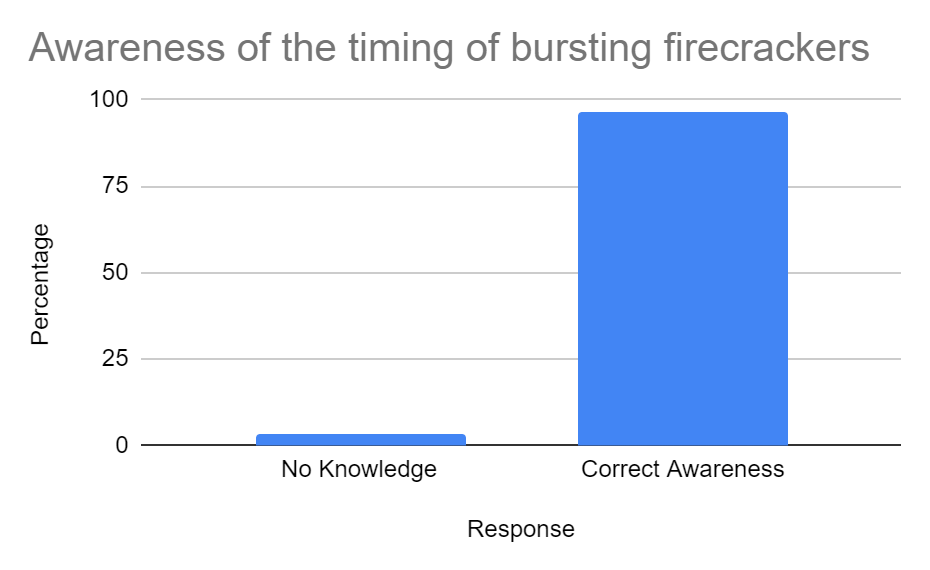
Figure 4: People’s awareness of the timing of bursting crackers
The Air Quality Status and Impending Risks during Diwali:
The average daily Air Quality Index (AQI), PM2.5, and PM10 levels in Bhubaneswar have consistently remained within the Moderate range, except for a brief period of approximately 4 days when they temporarily exceeded this threshold due to overcast weather and some precipitation. The highest recorded daily mean AQI was observed on October 31st, reaching a value of 183, with average PM2.5 and PM10 levels measuring 84.97 µg/m³ and 136.81 µg/m³, respectively. These values significantly exceeded the permissible limits of 50 µg/m³ for PM2.5 and 100 µg/m³ for PM10. It is evident that the arrival of winter, along with the resumption of normal city activities and the use of firecrackers, may be contributing to this increase in air pollution. On the morning of October 8th at 8 a.m., the recorded Air Quality Index (AQI) value was already in the moderate range, reaching 171, making it the second-highest value during the study period. Additionally, the levels of PM2.5 and PM10 stood at 81.37 µg/m³ and 139.62 µg/m³, respectively.
The predicament and Diwali effect:
Recommendations:
Speaking from an overall perspective, people of Bhubaneswar may know completely or partially about the ban, the timings and the mandate with green crackers, but the Diwali celebrations will remain compromised one way or the other unless 100% of the citizens either switch to the use of only certified GREEN CRACKERS , or find some miraculous solace in celebrating Diwali with complete abstinence from firecrackers of any type.
Mr. Vinay Jaju, Managing Director, SwitchON Foundation said, “Through our studies it has clearly come out that there is a lot to be achieved to be able to implement the green crackers orders. From our survey with consumers we have seen that many people do not know about the window timing of 8 to 10 burning of green crackers and also the fact that only green crackers are allowed and conventional crackers have been banned. So there is a lot more awareness that has to be followed. But more importantly, we still see conventional fire crackers being sold. We have to have some very strict crackdown at the industry stage itself where the conventional crackers are still being sold. It is also important that support is offered to them for the transition of these industries to green crackers. What we are seeing in the market is that many crackers just have the green cracker logo but their QR codes are actually fake or not operational. In Fact, the whole QR code system is very cumbersome and it is not even updated. Most consumers don’t even know how a certificate is coming which is very hard to understand and evaluate. So there are a lot of malpractices that are happening on the ground and there’s a huge amount of lack of awareness on the ground. The industries’ transition has to be thought about in a detailed and deep manner. While we are promoting as an organization not to use any firecrackers, we know that green crackers will still be around and we have to put the right ecosystem, awareness and capacity building in place for them to be finally adopted and a very strong crackdown on all conventional firecrackers.”
Contact: Vinay Jaju | M: +91 9331178105 | Email: VJ@SwitchON.org.in
1 Comment
Diwali, also known as the Festival of Lights, is a significant Hindu festival celebrated with great fervor across India and in various parts of the world. Fireworks and crackers are an integral part of Diwali celebrations, symbolizing the victory of light over darkness and good over evil. Several techniques are employed to make crackers “green.” These include using less polluting raw materials, such as reducing the sulfur content in the gunpowder mixture, incorporating eco-friendly additives, and developing new formulations that produce less smoke and noise. Additionally, some green crackers use compressed air technology to create bursts of light and sound, rather than relying solely on explosive compounds. https://www.welcomecrackers.com
Leave a Reply