Green Diwali 2023
Published in - CASC
Dec 08, 2023
Green Diwali 2023
As winter descends, Diwali festivities in India worsen the country’s already severe air pollution crisis. The cold winds
trap pollutants in the atmosphere, contributing to India’s consistently poor global air quality rankings. Kolkata, a
major eastern city, now holds the unfortunate title of the world’s second most polluted city, recording a PM2.5 level at
a staggering 84.5 µg/m3—17 times higher than the World
Health Organization‘s safety limit of 5 µg/m3. This alarming trend poses significant public health concerns,
according to a report by India
Today.
Investigating People’s Perspective:
Despite the administration’s on-paper regulations and penalties for illegal fireworks activities, the lack of public
awareness about green crackers during Diwali remains a significant issue. To address this, the government is making
efforts, to establish green cracker markets in prominent Kolkata areas as per a report of The
Telegraph Dated 4th November at Shahid Minar, Tala Park, Behala, Kalikapur bazi bazaars. These
markets exclusively sell green crackers with the CSIR-NEERI logo and a QR code certifying their eco-friendliness. These
are devoid of toxic barium compounds and create 30% less pollution.
The research team at SwitchON Foundation conducted a cross-sectional survey at the above-mentioned licensed bazi bazaars
to gain insights into the public’s perception of “Green Diwali”. The study was focused on engaging
potential buyers of green crackers. Subsequently, flash surveys were executed with the respondents at the Baji Bazars
between the 7th and 8th of November, with a sample size of 296 random individuals consisting of 185
male and 111 female participants. The findings and conclusions are listed herein:
Findings:
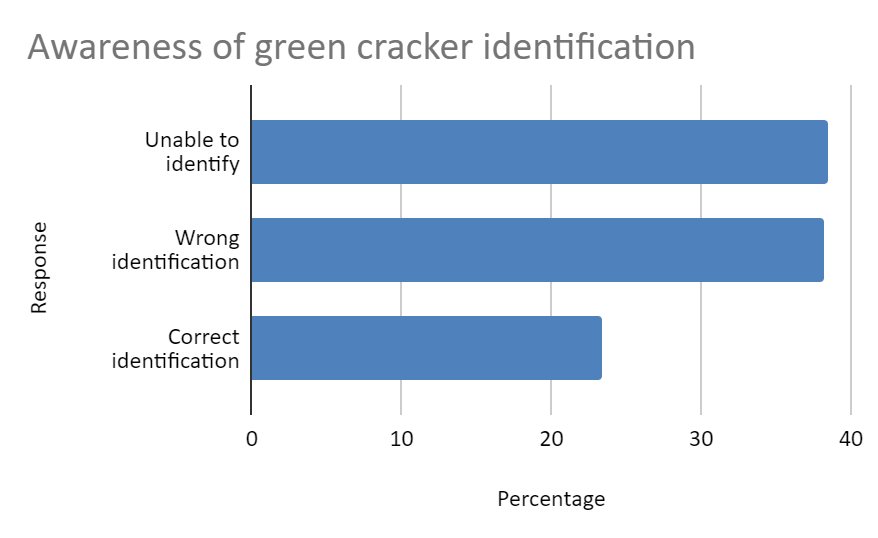
Figure 1:
People’s awareness of green crackers identification in Kolkata
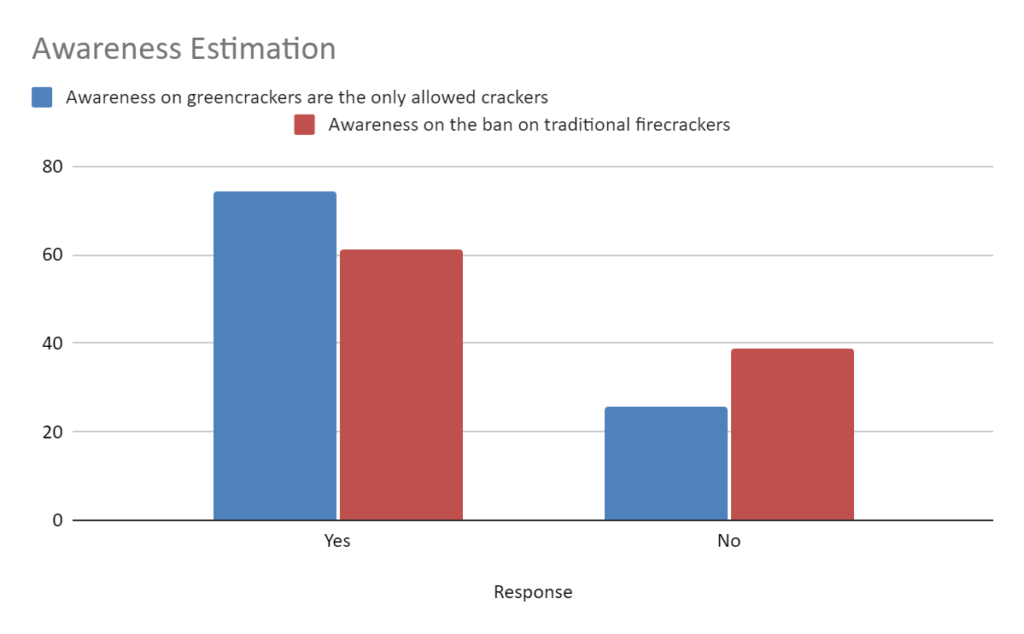
Figure 2.: People’s awareness of the permission and ban on crackers in Kolkata
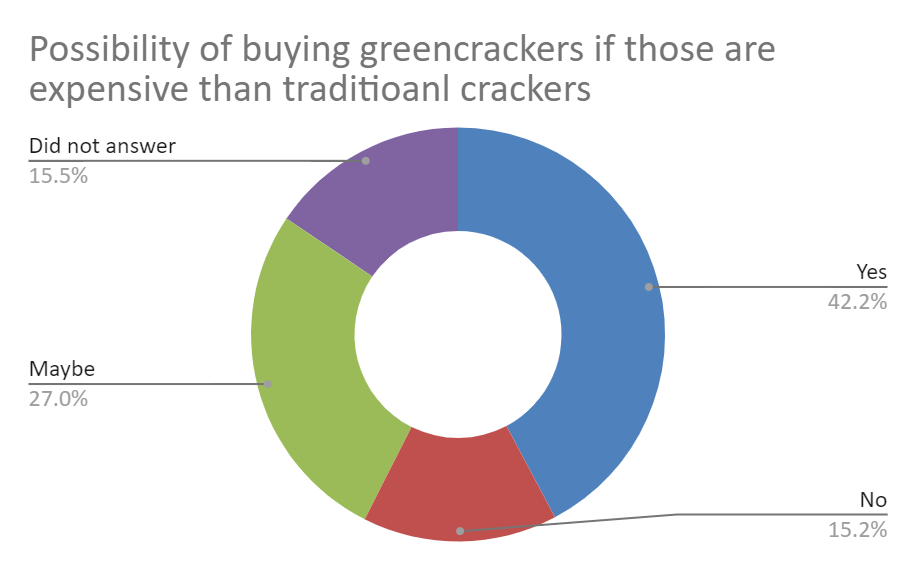
Figure 3:
People’s Opinion on premium-priced green crackers
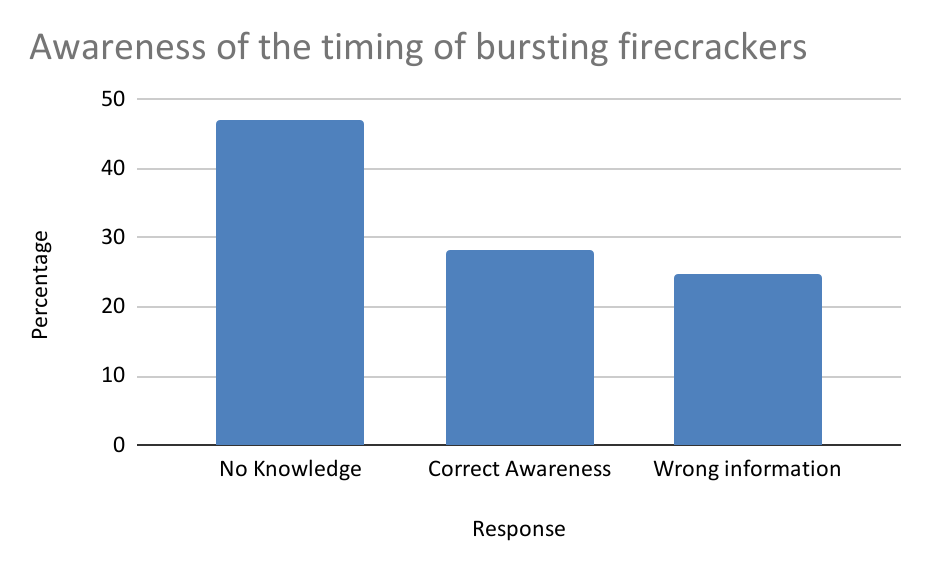
Figure 4:
People’s awareness of the timing of bursting crackers
The Air Quality Status and Impending Risks during Diwali:
Air Quality Index (AQI) in Kolkata is rapidly deteriorating ahead of Diwali following a report in The
Hindu dated 8.11.2023 prepared based on Central Pollution Control Board (CPCB) data, wherein the morning of 8th
November (8 AM) observed “Poor” air quality with 249 AQI where PM2.5 and
PM10 concentration was 104.65 µg/m3 and 188.58 µg/m3
respectively. To reduce the pollutant footprint of Diwali, the West Bengal Pollution Control Board (WBPCB) has, as per
the guidelines of the Hon’ Supreme Court of India, put forth a set of enforcements along with the State Police
authorities in conjunction with the developed green crackers by the Council of Scientific & Industrial
Research-Narional Environmental Engineering Research Institute (CSIR-NEERI) and Petroleum and Explosive Safety
Organisation (PESO) quality certification. The original court guidelines
clearly mention-
Recommendations:
Speaking from an overall perspective, Calcuttans may know completely or partially about the ban, the timings and the
mandate with green crackers, but the Diwali celebrations will remain compromised one way or the other unless 100% of the
citizens either switch to the use of only certified GREEN CRACKERS , or find some miraculous solace in
celebrating Diwali with complete abstinence from firecrackers of any type.
Mr. Vinay Jaju, Managing Director, SwitchON Foundation said, “Through our studies it has clearly come out that
there is a lot to be achieved to be able to implement the green crackers orders. From our survey with consumers we
have seen that many people do not know about the window timing of 8 to 10 burning of green crackers and also
the fact that only green crackers are allowed and conventional crackers have been banned. So there is a lot more
awareness that has to be followed. But more importantly, we still see conventional fire crackers being sold. We have
to have some very strict crackdown at the industry stage itself where the conventional crackers are still
being sold. It is also important that support is offered to them for the transition of these industries to green
crackers. What we are seeing in the market is that many crackers just have the green cracker logo but their QR
codes are actually fake or not operational. In Fact, the whole QR code system is very cumbersome and it is not even
updated. Most consumers don’t even know how a certificate is coming which is very hard to understand and evaluate.
So there are a lot of malpractices that are happening on the ground and there’s a huge amount of lack of awareness
on the ground. The industries’ transition has to be thought about in a detailed and deep manner. While we are
promoting as an organization not to use any firecrackers, we know that green crackers will still be around and we
have to put the right ecosystem, awareness and capacity building in place for them to be finally adopted and a very
strong crackdown on all conventional firecrackers.”
The Pretext
Diwali has now been linked to pollution and poor air quality, particularly due to
conventional crackers. High Particular Matter (PM) levels during post-Diwali in the last couple of decades has
sparked concerns. In response to the hike in pollution levels, the Supreme Court issued an order in 2018, led by
Justice A K Sikri, banning conventional firecrackers nationwide, endorsing “green crackers.”
These eco-friendly alternatives developed by CSIR-NEERI, reduced PM and gas emissions by
30% and 10%, respectively (WBPCB, 2022). As per the high court, Green crackers must be burst within a specific time
frame (8 pm to 10 pm) during the day. Noise levels are also capped at 125 decibels nationwide, with non-compliance
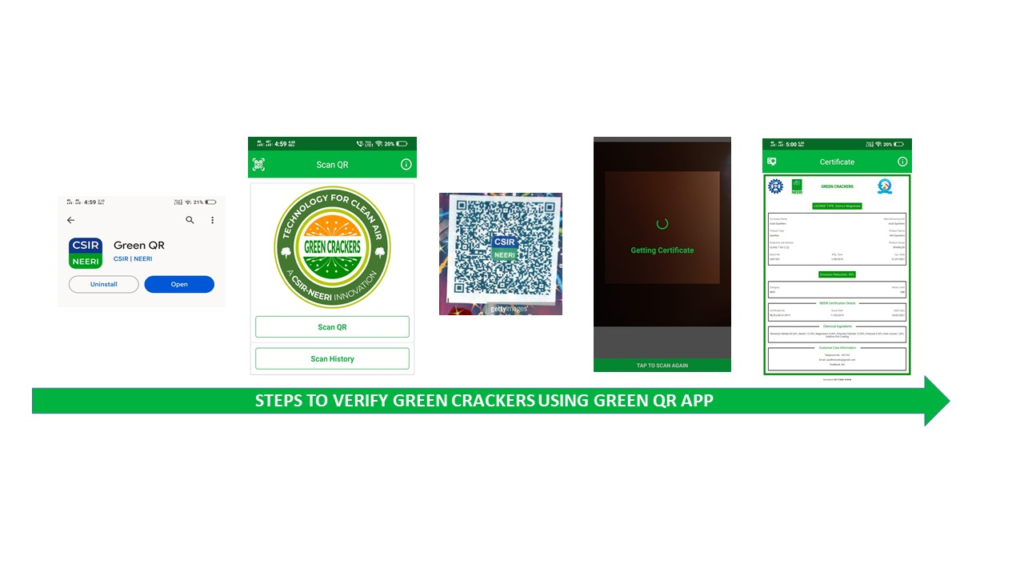
penalties ranging from 6 months to 5 years in prison. To ensure authenticity, CSIR made an app allowing users to
scan the QR code on the packaging to verify their authenticity (Annexure 8). Very few manufacturers have
obtained licenses to produce green crackers, as of October 30, 2023. Recent news articles and High Court
orders reinforce the ban on conventional firecrackers, promoting the sale and use of only green crackers, with
registered vendors and approved markets supporting the transition.
Methodology
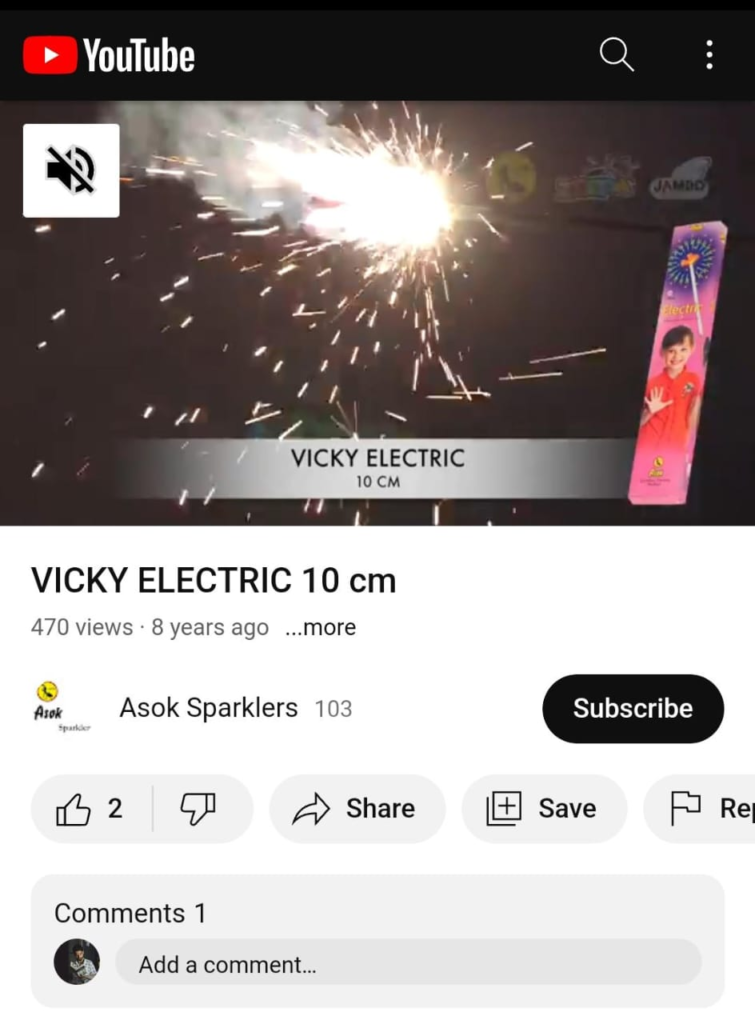
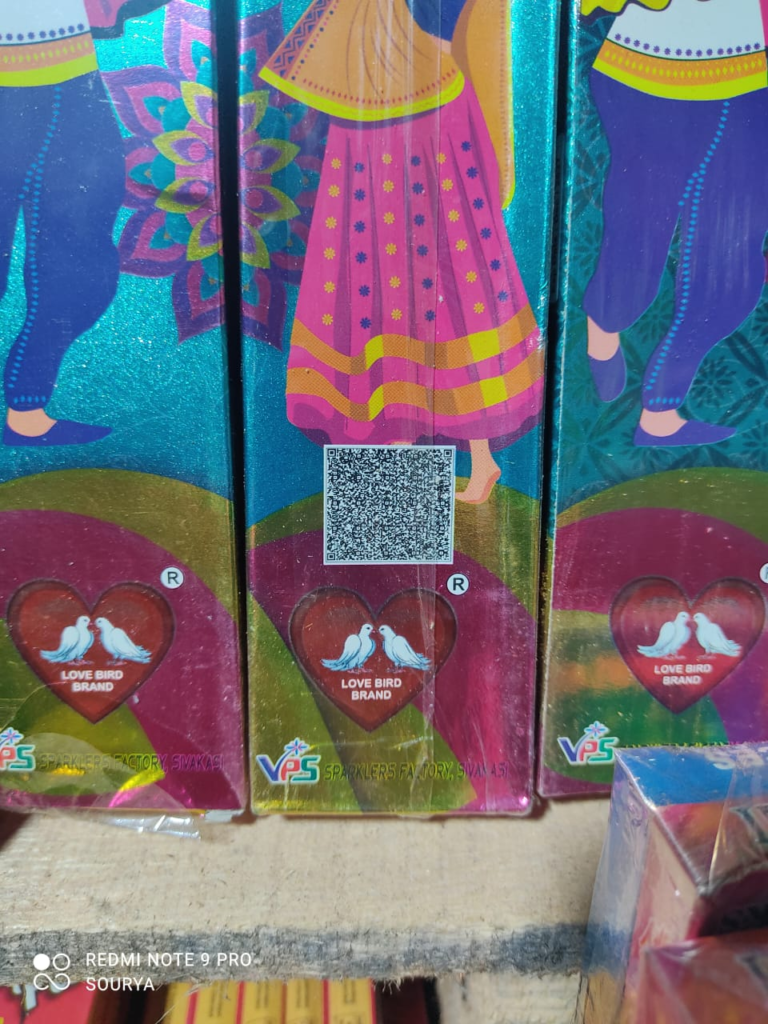
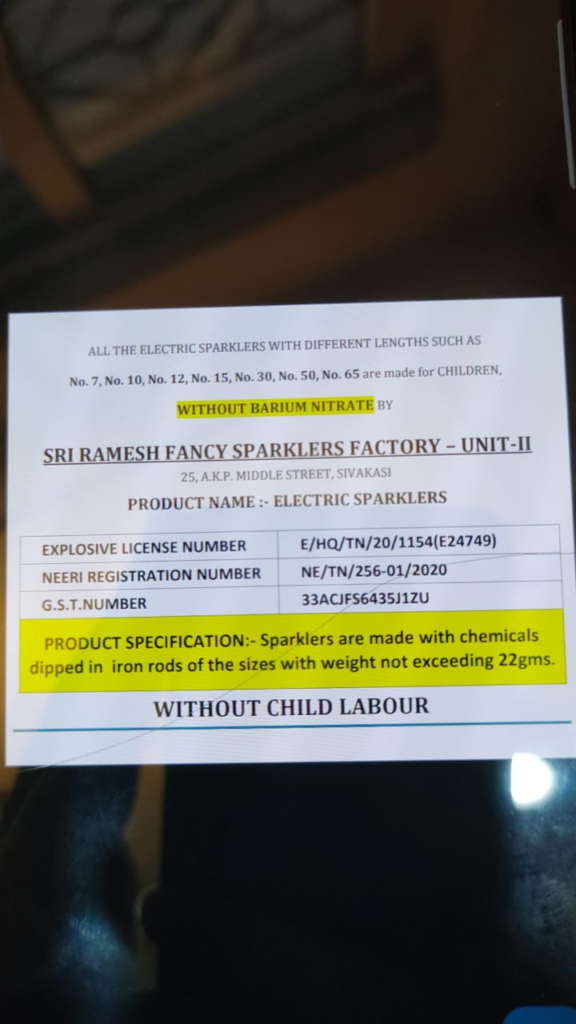
The SwitchON Foundation conducted research on the authenticity of QR codes displayed in
green crackers sold in Kolkata’s markets during the pre-Diwali season of 2023. When a green-certified product’s QR
code is scanned, it should automatically redirect to a green certificate given by CSIR-NEERI (Annexure 2).
This study employs a primary data collection approach and utilizes quantitative analysis
for data interpretation. SwitchON Foundation surveyed and interacted with the vendors, clicked pictures of the available products
and assessed the QR codes on the green cracker packets.
Location:
The study is conducted at three specific locations:
Sample Size:
Surveyed 35 shops and out of this 32 shops had QR scan codes in their products.
Findings:
The assessment (Figure 1.) revealed several 4 distinct categories, i.e.
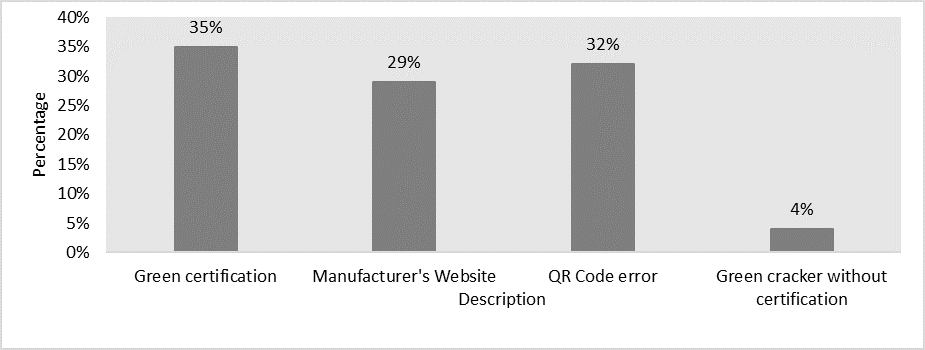
Fig.1. Status
of QR code scan those sold as Green crackers
The study clearly elucidates that only 35% (11 samples) of the products scrutinized in the licensed shops completely meet the guidelines for
public access and information to help them make the right consensual purchase decision. All the remaining sampled
products had the stipulated logo and QR yet failed to inform about the genuinity of the green cracker. This makes it
a critical obligation from both the manufacturer and government’s side to ensure that the verification protocols
stipulated for consumers are met, failing which a fully aware consumer might also fail to identify and use green
crackers and end up buying and consuming the banned products only.
Limitations:
Recommendation:
Mr. Vinay Jaju, Managing Director, SwitchON Foundation said, “Through our
studies it has clearly come out that there is a lot to be achieved to be able to implement the green crackers
orders. From our survey with consumers we have seen that many people do not know about the window timing of 8
to 10 burning of green crackers and also the fact that only green crackers are allowed and conventional crackers
have been banned. So there is a lot more awareness that has to be followed. But more importantly, we still see
conventional fire crackers being sold. We have to have some very strict crackdown at the industry stage itself where
the conventional crackers are still being sold. It is also important that support is offered to them for the
transition of these industries to green crackers. What we are seeing in the market is that many crackers just
have the green cracker logo but their QR codes are actually fake or not operational. Infact, the whole QR code
system is very cumbersome and it is not even updated. Most consumers don’t even know how a certificate is coming
which is very hard to understand and evaluate. So there are a lot of malpractices that are happening on the ground
and there’s a huge amount of lack of awareness on the ground. The industries’ transition has to be thought about in
a detailed and deep manner. While we are promoting as an organization not to use any firecrackers, we know that
green crackers will still be around and we have to put the right ecosystem, awareness and capacity building in place
for them to be finally adopted and a very strong crackdown on all conventional firecrackers.”
Annexure 1
Table 1: Status of QR code scan those sold as Green
crackers
| Proper CSIR certification | Manufacturer’s Website | QR code errors | without proper certification |
| 35% | 29% | 32% | 4% |
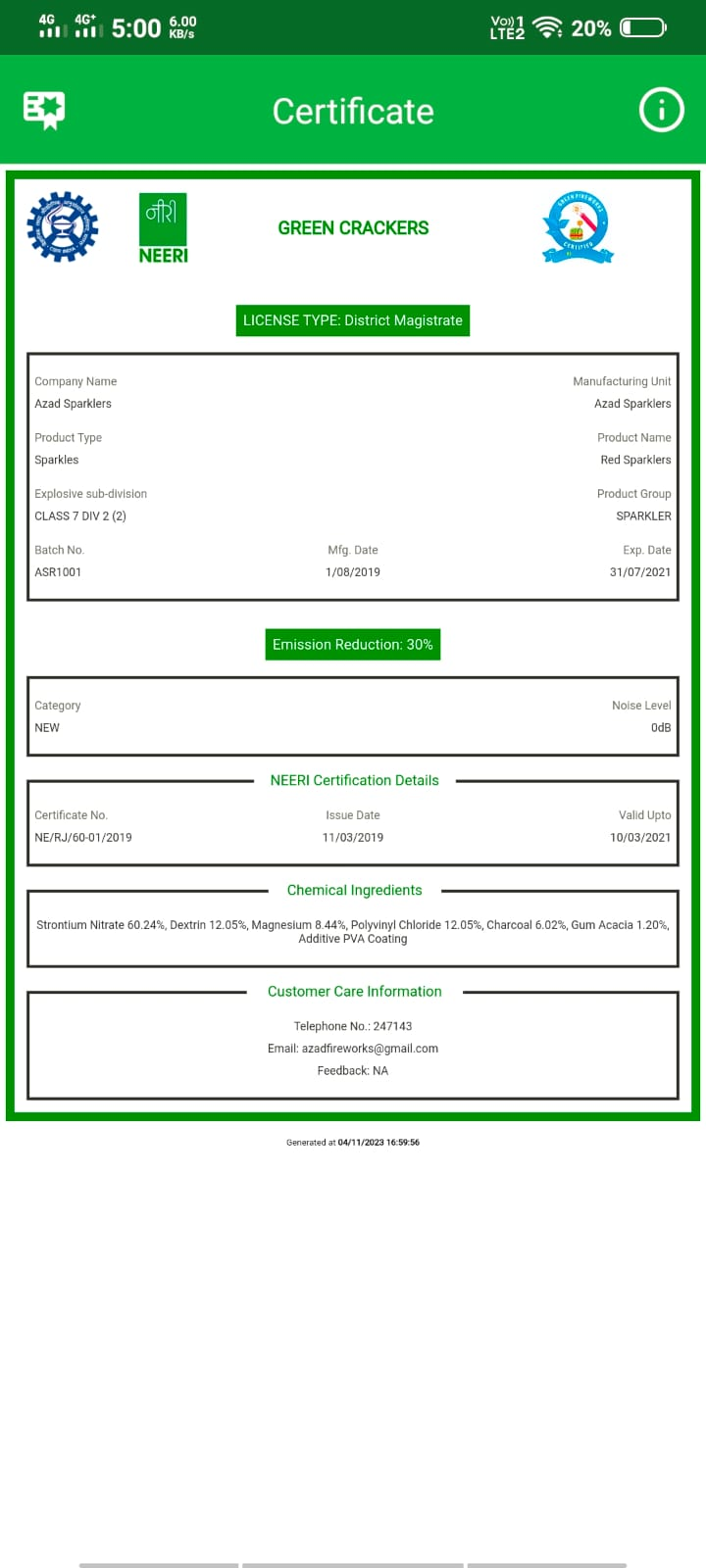
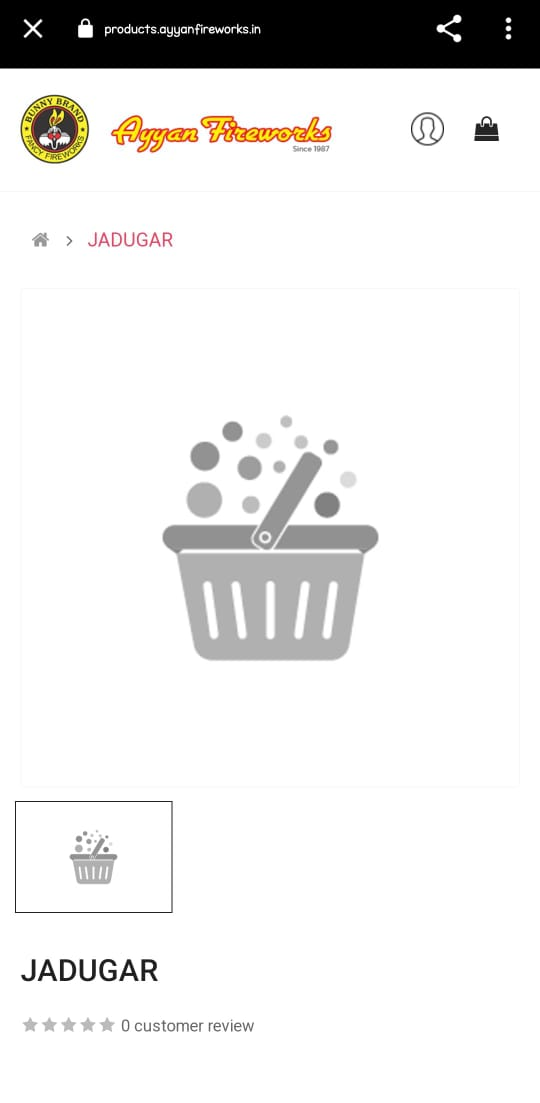
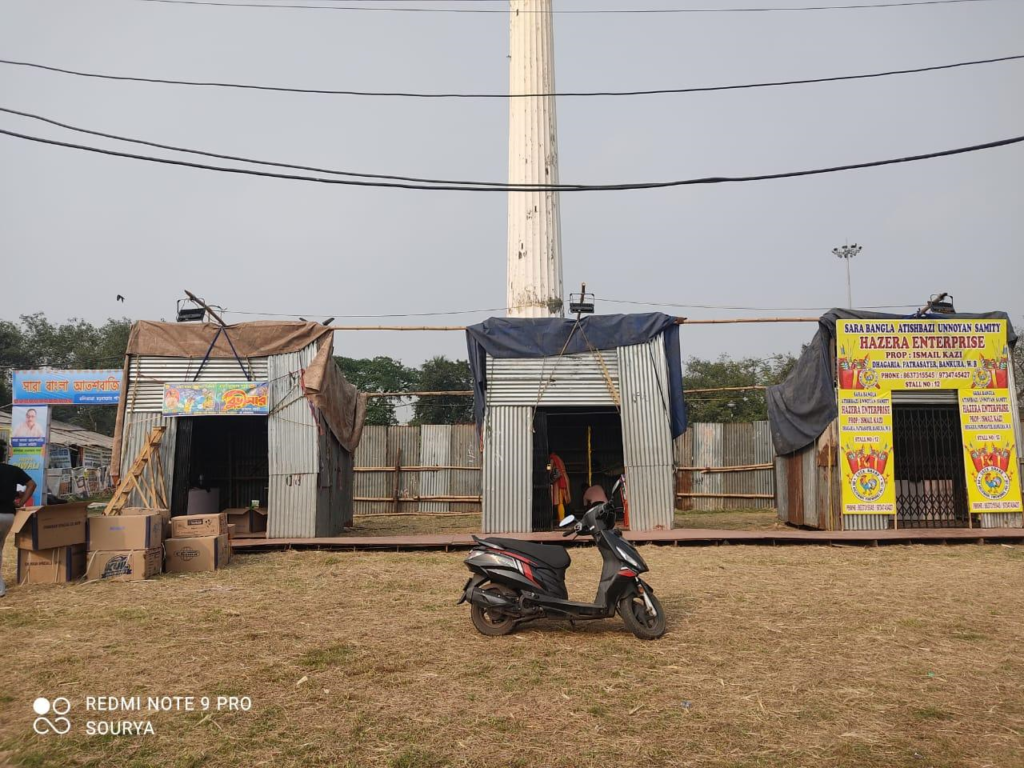
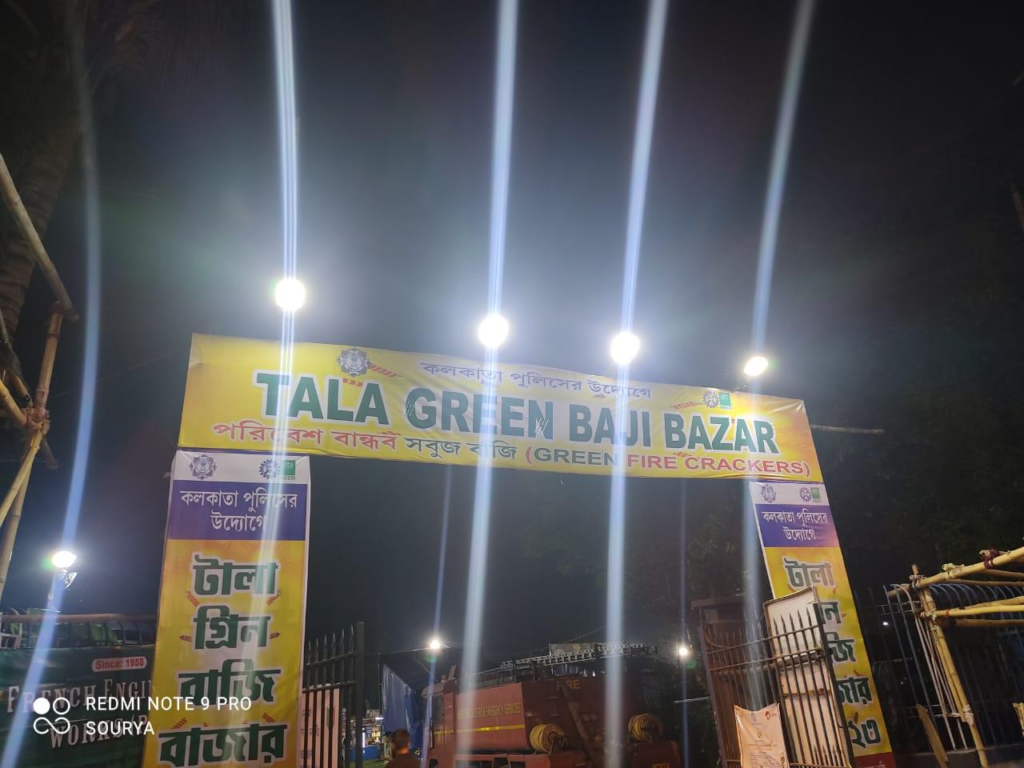 Annexure 7: Talapark Bazi Bazar
Annexure 8: Flow chart of QR Scanning
To celebrate the more sustainable and eco-friendly festival this year, CSIR Neeri has
taken the initiative to certify all types of conventional crackers. Conventional crackers are mainly made of barium
compounds, which enhance the green color of the cracker. This leads to higher emissions of particulate matter (PM)
and other toxic gases. In addition, it produces noise in excess of 125dB and higher pollution levels. Green crackers
on the other hand are devoid of barium compounds reducing PM emissions by 30% and noise level within the 125dB
permissible limit.
This year, SwitchON Foundation conducted a vendor study in two different green cracker
markets in Kolkata, Sahid Minar and Tala Park, and some local vendors/roadside shops in Bhawanipur. This study
mainly looks into vendor growth and awareness towards the green cracker stock and supply.
Methodology:
This study employs a primary data collection approach and utilizes quantitative analysis
for data interpretation. SwitchON Foundation surveyed and interacted with the vendors and kept records in Google
form.
Location:
The study is conducted at three specific locations:
Sample size:
SwitchON Foundation surveyed 19 shops.
Table 1. Category, Location and Survey Population Count
|
Vendor Category |
Survey Location/Market | Shops Visited/Surveyed |
|
Govt. approved licensed Shops |
Tala Park |
12 |
|
SahidMinar |
4 |
|
| Non-licensed local shops/Roadside vendors |
Bhawanipur |
3 |
Findings:
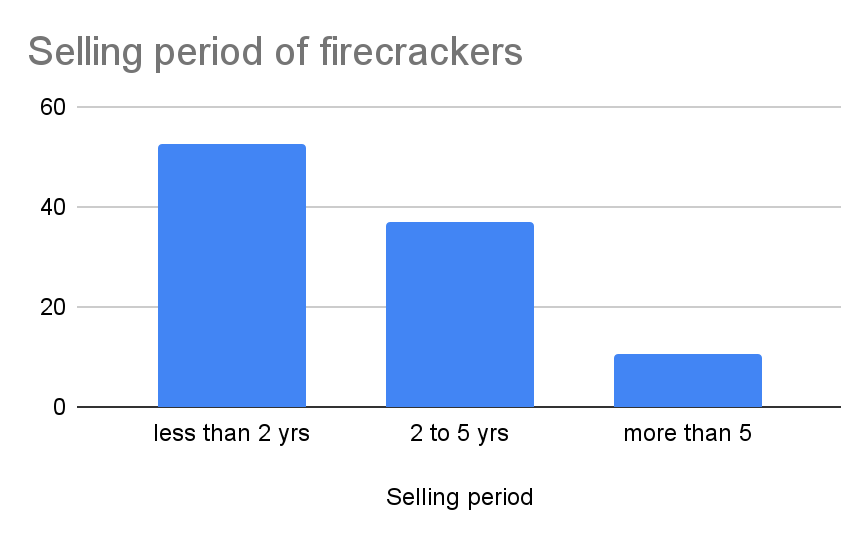
Figure 1:
Conventional crackers selling periods
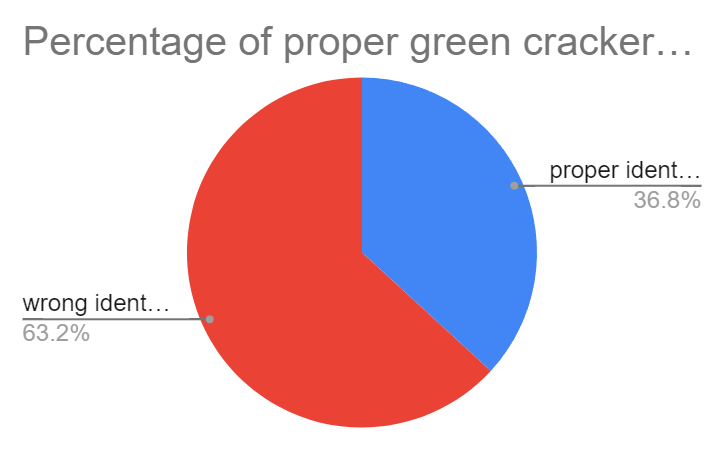
Figure 2:
Percentage of green cracker identification by shopkeepers
– Bazi market vendors said, in the Bazi market 100% are green
crackers.
– Out of all the shops in Bhawanipur market, 84% sold green crackers, whereas 16% of shops were still selling conventional crackers. (Ref figure 3).
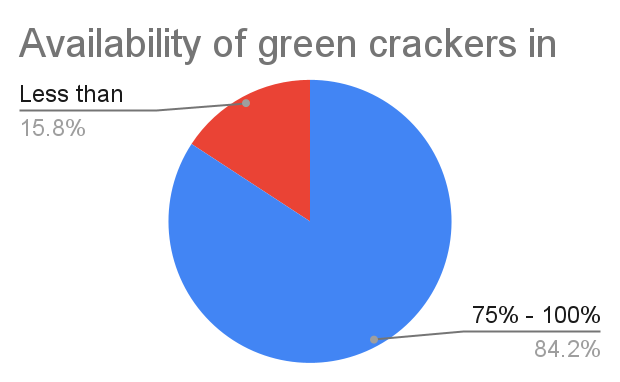
Figure 3:
Availability of green crackers in the shop
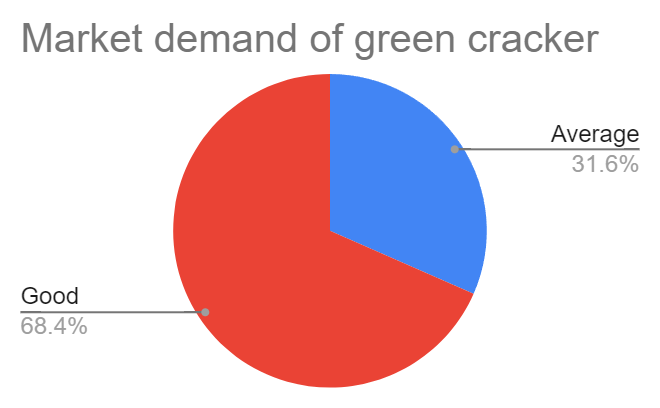
Figure
4: Market demand for green cracker
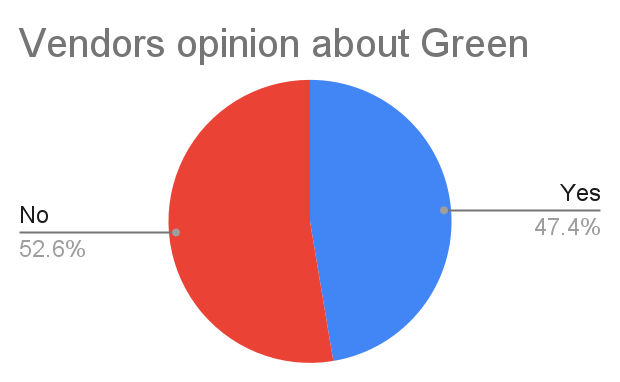
Figure 5:
Vendor’s opinion about the price of Green crackers
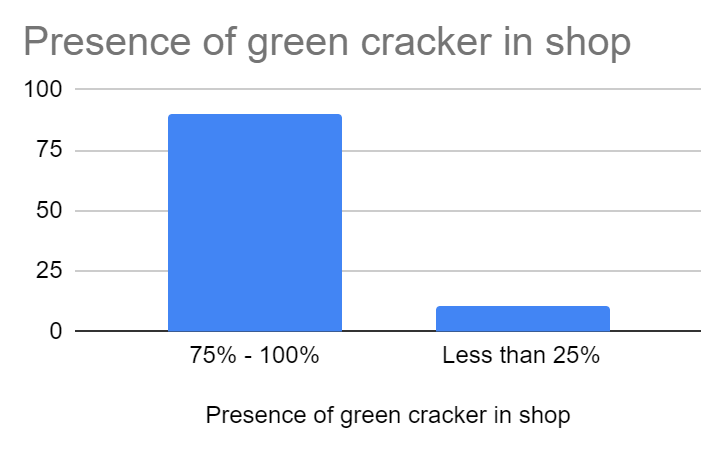
Figure 6:
Presence of green crackers in shops
Key Observations:
The survey critically analyses the vendor’s perspective and awareness of green crackers
and what they are stocking and selling to consumers. The study observes the following:
Recommendation:
Mr. Vinay Jaju, Managing Director, SwitchON Foundation said, “Through our
studies it has clearly come out that there is a lot to be achieved to be able to implement the green crackers
orders. From our survey with consumers we have seen that many people do not know about the window timing of 8
to 10 burning of green crackers and also the fact that only green crackers are allowed and conventional crackers
have been banned. So there is a lot more awareness that has to be followed. But more importantly, we still see
conventional fire crackers being sold. We have to have some very strict crackdown at the industry stage itself where
the conventional crackers are still being sold. It is also important that support is offered to them for the
transition of these industries to green crackers. What we are seeing in the market is that many crackers just
have the green cracker logo but their QR codes are actually fake or not operational. In Fact, the whole QR
code system is very cumbersome and it is not even updated. Most consumers don’t even know how a certificate is
coming which is very hard to understand and evaluate. So there are a lot of malpractices that are happening on the
ground and there’s a huge amount of lack of awareness on the ground. The industries’ transition has to be thought
about in a detailed and deep manner. While we are promoting as an organization not to use any firecrackers, we know
that green crackers will still be around and we have to put the right ecosystem, awareness and capacity building in
place for them to be finally adopted and a very strong crackdown on all conventional firecrackers.”
Contact: Vinay Jaju | M: +91 9331178105 | Email: VJ@SwitchON.org.in
0 Comments
Leave a Reply