Kolkata’s Pre-Diwali Air Quality Story

Signalling a Call for Clean & Green Celebrations
  • Switchon logo
  • Published in:
  • 7 mins read
  • Oct 20 2025
Share

Introduction

India is preparing for its grand festival of lights, Diwali. It is a time of warmth, togetherness, and hope, when homes are lit with lamps and hearts glow with joy. Across parts of eastern India, the same festive season is also marked by Kali Puja, the worship of the goddess Kali. Yet, as every sparkle casts a light, it also creates a shadow. Behind the glitter and glow, Diwali brings with it an often-ignored environmental reality, a sharp spike in air pollution.

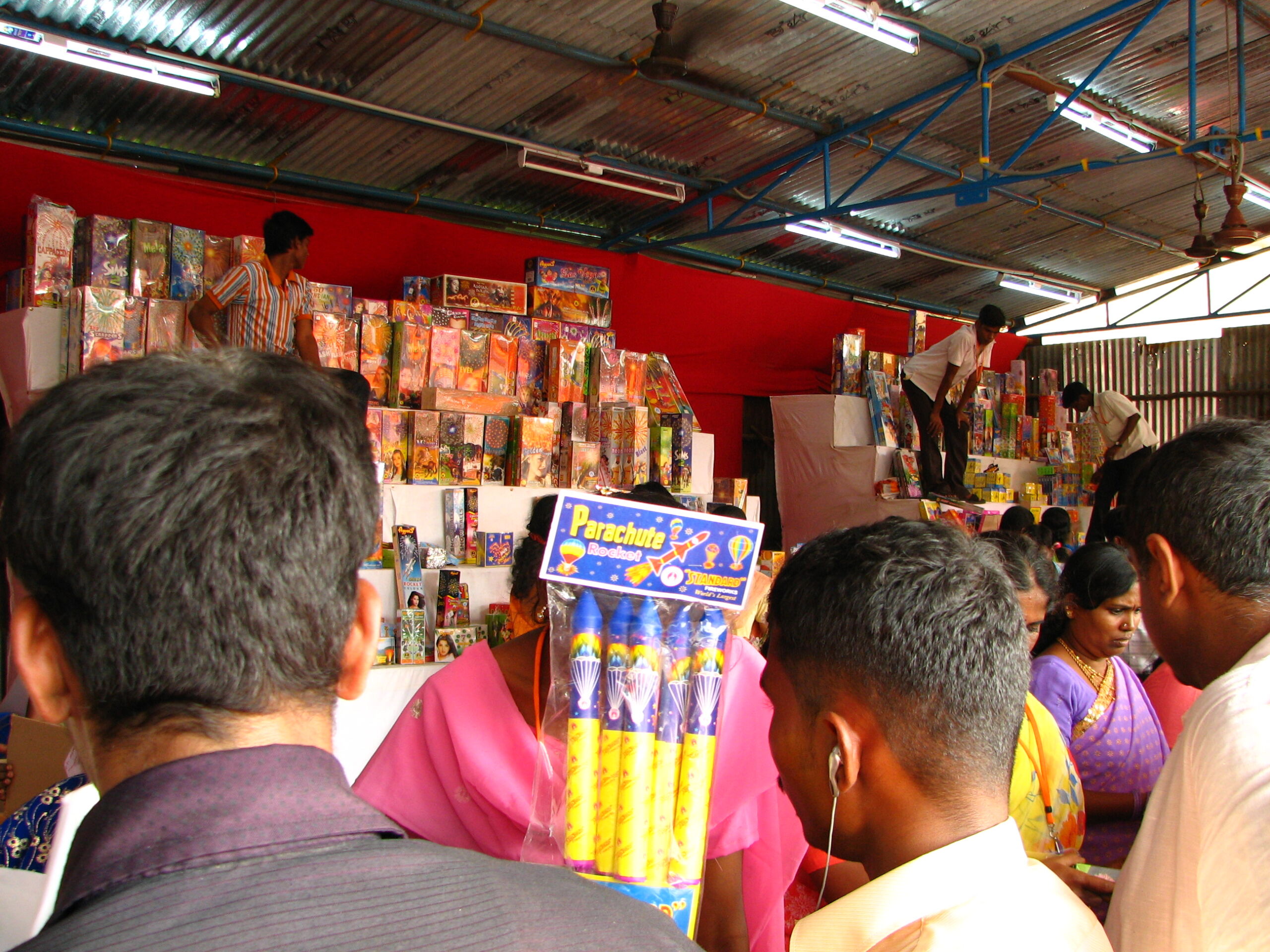
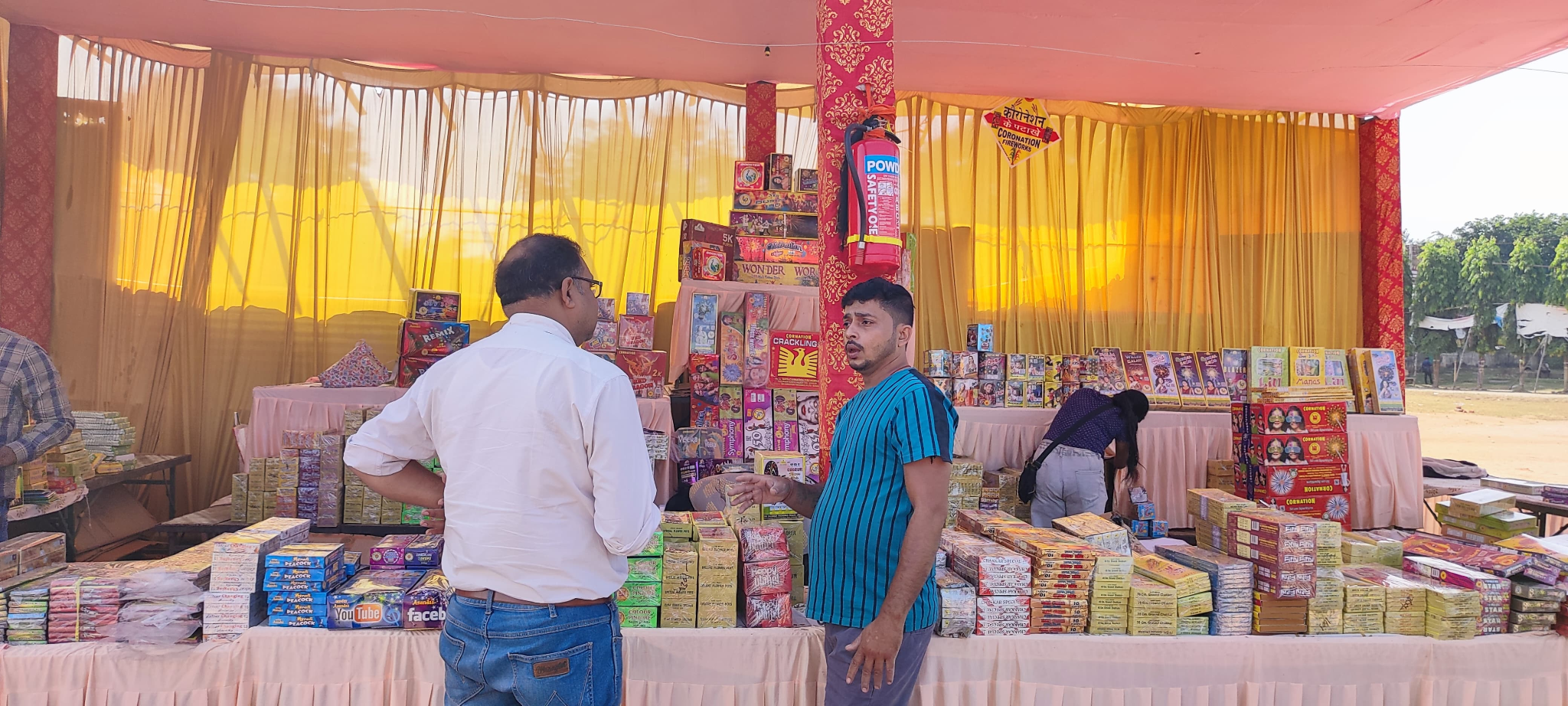
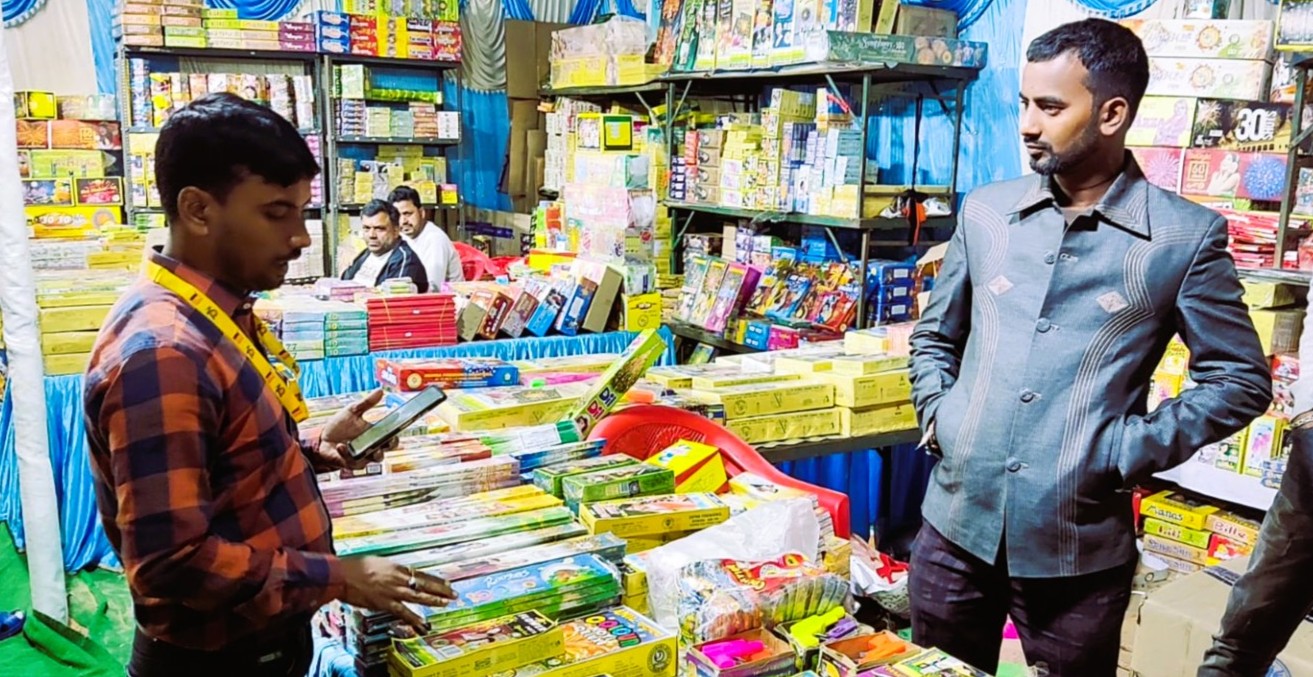
Firecrackers, one of the most anticipated parts of the festival, release a bunch of harmful substances like particulate matter (PM2.5 and PM10), nitrogen dioxide (NO₂), sulphur dioxide (SO₂), carbon monoxide (CO), volatile organic compounds, and heavy metals like lead, copper, and barium. These pollutants don’t just cloud the night sky; they enter our lungs, aggravate respiratory and cardiovascular conditions, and pose serious risks for the elderly, children, and those with chronic diseases.

This year, the environmental forecast may intensify the scenario further. With the La Niña phenomenon, India is likely to experience an earlier and colder winter. Cooler air, combined with reduced wind movement, traps pollutants close to the surface, which is a perfect match for dense smog and poor air quality.

Amid this growing concern, SwitchON Foundation continues to lead initiatives for Clean Air and Sustainable Cities. Through evidence-based research, citizen engagement, and policy-oriented communication, the organisation strives to promote behavioural change and inform policymakers on building a cleaner, healthier tomorrow.


The Scenario of Kolkata: A fortnight before Diwali

To understand the city’s air quality situation ahead of Diwali 2025, SwitchON studied Kolkata’s pre-festive air quality. The goal was to gauge what the city residents, especially its vulnerable groups, might face when the festivities reach full swing.

Kolkata, with its growing vehicular density, is battling air pollution year-round. While recent untimely rainfall due to multiple depressions in the Bay of Bengal region temporarily cleared the air, the improvement was short-lived. As the rains receded and the familiar winter chill set in, the city’s Air Quality Index (AQI) began to deteriorate.

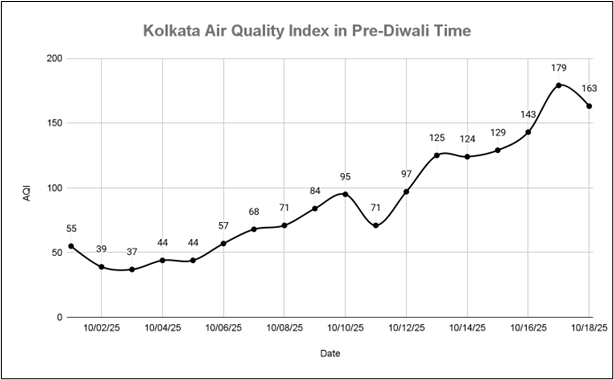
According to data from the CPCB’s Sameer App, nitrogen dioxide (NO₂) has been the dominant pollutant in the days leading up to Diwali. Figure 1 below shows that the overall city AQI this time has remained moderate (101-200), but there is a steady rise in pollution levels.
Among Kolkata’s seven monitoring stations, Rabindra Bharati University (RBU) recorded the highest AQI, reaching 281 (poor category) as of 17th October, followed by Jadavpur at 247 AQI mark. Prolonged exposure to such levels can cause breathing discomfort even among healthy individuals. Areas like Victoria Memorial and Ballygunge also hovered around the moderate category, driven by PM2.5 and PM10 concentrations, while Fort William, Rabindra Sarobar, and Bidhannagar reported slightly better air quality. 

Table 1: Pre-Diwali AQI in different parts of Kolkata

Date Victoria Rabindra Bharati Jadavpur Fort William Rabindra Sarobar Bidannagar Ballygunge
10/13/25 136 179 160 99 101 84 113
10/14/25 141 191 156 100 81 92 107
10/15/25 131 208 171 99 86 98 113
10/16/25 142 221 192 103 117 104 123
10/17/25 184 281 247 119 138 123 161
10/18/25 Nil Nil 242 115 116 108 143

Source: Sameer App by CPCB


Looking Back: Pre-Diwali Trends Over the Years

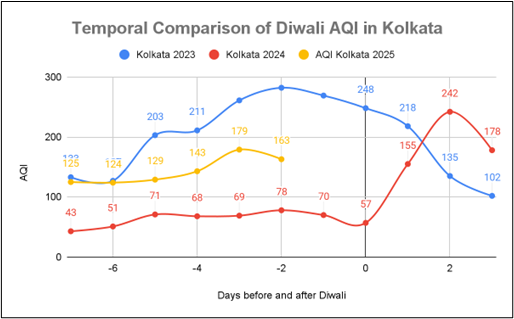
A comparison of pre-Diwali air quality from 2023 to 2025 paints an interesting picture. In 2023, Kolkata witnessed severe air deterioration in the week leading up to Diwali, while the 2024 pre-Diwali week came with a far better scenario (Figure 2), likely due to Cyclone Dana, which cleaned the atmosphere with heavy rain.

This year’s pattern mirrors 2024’s, with moderate AQI readings holding steady so far. But history warns that the post-Diwali surge could be steep once the celebrations begin, especially if calm weather persists.


Across India: A Shared Air Crisis

Kolkata’s struggle is part of a broader subcontinental challenge. As winter approaches, low temperatures and stagnant air create conditions for pollution to linger over many Indian cities.

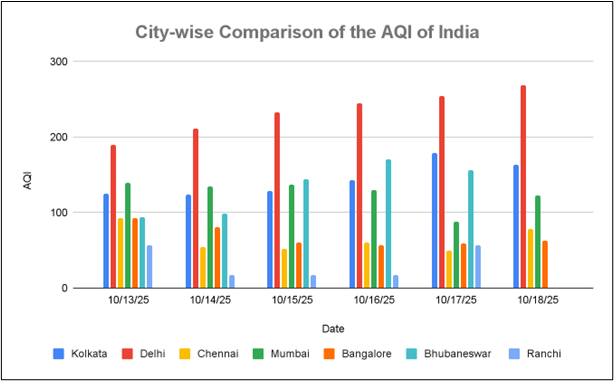
In Delhi, AQI levels have already slipped into the poor category, primarily due to ozone and particulate matter. The National Capital Region remains one of the most polluted zones globally during the winter period. Though the overall condition of the air quality of Kolkata is not as bad as Delhi, these are the two metropolitan cities in India that are constantly recording increasing pollution levels in the pre-Diwali week. 

Meanwhile, Mumbai has maintained a moderate AQI, with ozone and PM10 as the main culprits. This time, Mumbai’s AQI trends are almost similar to Kolkata’s AQI (Figure 3). Chennai and Bengaluru enjoy relatively cleaner air, fluctuating between satisfactory and good quality, while Ranchi, according to JSPCB data, also maintains healthy air conditions.

These variations highlight a stark truth — geography matters. Coastal cities benefit from sea breezes, but landlocked regions like Delhi trap pollution, amplifying its effects.

  • Diwali
  • AirPollution
  • GreenCrackers
  • EnvironmentImpact
  • AQI

How do you feel?

guest
0 Comments
Inline Feedbacks
View all comments

Stay Engaged with these Reads