How one woman-led SHG turned a struggling bio-input unit into a thriving village enterprise
Published in - EEWA
Dec 05, 2025
How one woman-led SHG turned a struggling bio-input unit into a thriving village enterprise
“I never thought our small centre could serve an entire block,” smiles a Udyamini didi from the Kuhukeka SHG in Haringhata.
In Harinkhaola village, a group of determined women had the skills, the will, and the community’s trust. What they lacked was one thing: a way to produce clean, quality bio-inputs without losing half their batches to contamination. Every contaminated mother culture meant a lost season, lost income, and lost hope. The women knew the need was huge—farmers were shifting to natural inputs—but they simply could not meet the demand.
Harinkhaola Village in Kasthadanga Gram Panchayat sits in the heart of Haringhata, where farming families depend heavily on soil health and low-cost inputs. Across West Bengal, the push toward regenerative agriculture is growing. SHG didis and Udyamini didis trained under government schemes like Anandadhara Prakalpa are playing a central role.
This story matters because bio-inputs are the backbone of sustainable agriculture — and women are emerging as the leaders who make it possible.
The women of Kuhukeka SHG were making Trichoderma, Pseudomonas, and other bio-inputs, but their batches often got spoiled. The mother culture would get contaminated, they were unsure about storage limits, and their small centre did not have the right tools. Demand from farmers was increasing, yet they could not produce enough.
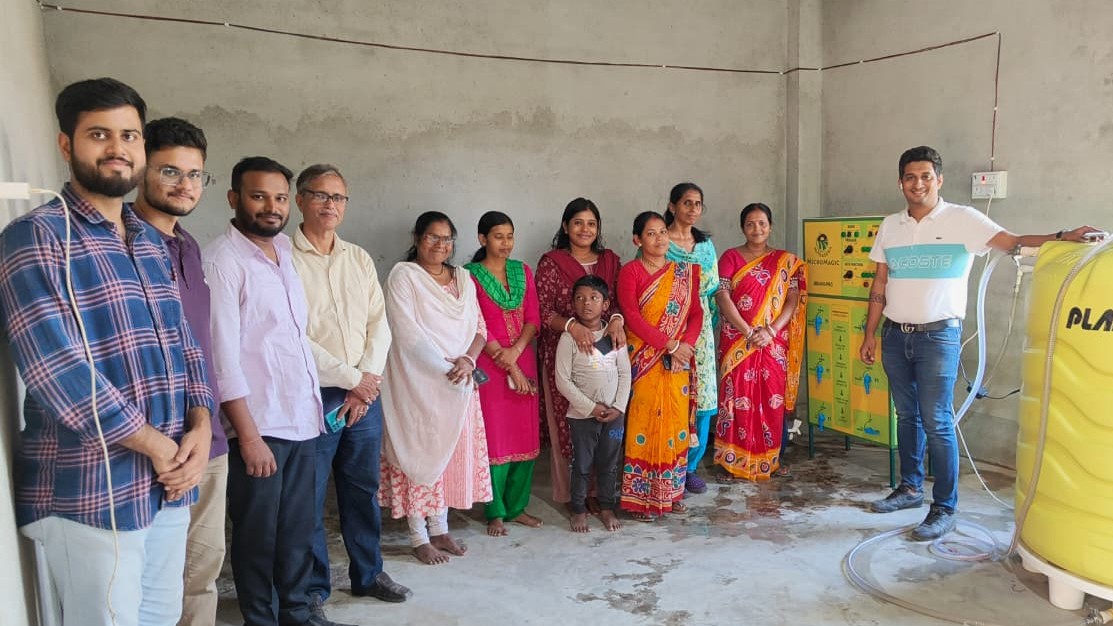
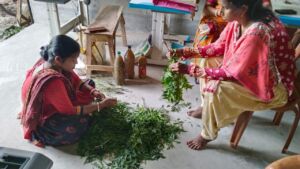
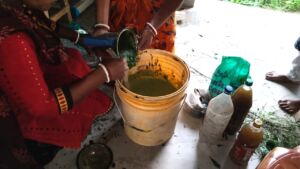
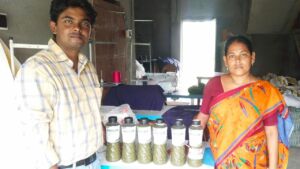
SwitchON stepped in to strengthen both skills and systems. The team connected the SHG with Nadia KVKs to source pure mother culture and learn correct handling techniques. They trained the women to prepare Neemastra, Brahmastra, and other natural solutions safely. A Bio-Resource Centre (BRC) was then set up with machines that reduced contamination, protected the culture, and supported larger, cleaner production.
With better training and better tools, the women could finally match the demand in their village.
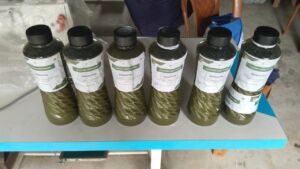
The change was quick and visible. The women shifted from frequent spoilage to producing clean, reliable bio-inputs in bulk. Sales increased as more farmers trusted their products, and the SHG’s income began to grow. Their confidence returned—they now run the centre smoothly, support nearby villages, and proudly call themselves entrepreneurs.
“Earlier, when we made everything by hand, the batches would often spoil. I used to feel helpless. But after working with the BRC machines, I can clearly see the difference — the quality is stable, and I finally feel confident in what we produce.” – Rima Sarkar.
0 Comments
Leave a Reply